
A room
The advisory council meets and the outcome is agreed in language everyone at the table can hold. Nothing has touched the ground yet, and the constraints that will decide the work are still assumptions.
Convenings, deployments, partner sites, and the communities the initiatives serve. Every one of the seven eventually has to work inside a room that was not built for it.
From strategy to site
Nothing about an initiative is real until it is inside a building with a roster, a network, a budget line and a procurement route already in it.
The advisory council meets and the outcome is agreed in language everyone at the table can hold. Nothing has touched the ground yet, and the constraints that will decide the work are still assumptions.
Partners take the outcome into a clinic, a substation, a community centre, a cooperative or a control room — and the assumptions meet the building, the network, the roster and the procurement rules.
The point of the work is the day after handover. Local operators run the system, the measures agreed at design time start reporting, and the initiative either holds or it was a pilot.
Initiative to environment
The settings are taken from each initiative's own partner and council record — the organisations it has to operate inside, not places TGIF claims to have been.
Initiative Health
Clinics, diagnostic labs and ministry data offices
Initiative Climate
Generation sites, grid operators and planning authorities
Initiative Zero
Community centres, municipal offices and local training rooms
Initiative Talent
Universities, vocational institutes and employer sites
Initiative Food
Cooperatives, processing sites, logistics routes and lenders
Initiative Cities
City halls, transit authorities and utility control rooms
Initiative Africa
Chambers of commerce, regional institutions and diaspora networks
Who is already there
Every environment is already staffed, already busy and already accountable to somebody. These are the people whose routine the work has to fit.
Why it takes cross-sector coordination
Each of these sits between organisations rather than inside one. That is exactly the gap an initiative exists to hold.
The constraint is rarely the model. It is whether the data can move between the clinic, the lab and the ministry at all — which is an agreement problem before it is a technical one.
A population that cannot get online cannot be served by any of the systems the other six initiatives are building. Coverage is a precondition, not a feature.
Ministries, municipalities and utilities each have their own route, budget cycle and data rules. A design that ignores them is redesigned late and expensively.
Transit, water, waste and public safety data bought separately behave as four systems. Making them behave as one estate is an organisational decision as much as an integration.
A deployment that leaves when the funding leaves was never an initiative. Training local operators is part of the work, not a closing activity.
Yield, outage hours, time to diagnosis, households connected: the measure has to satisfy the funder, the operator and the regulator at once, or it will be renegotiated after the fact.
On site
The photographs below are illustrative of the environments each initiative works in. They do not document a specific TGIF deployment, and are not captioned as if they did.

Clinics, diagnostic labs and ministry data offices.
Initiative Health — records at the point of care

Generation sites, grid operators and planning authorities.
Initiative Climate — distributed generation

Community centres, municipal offices and local training rooms.
Initiative Zero — community convening

Universities, vocational institutes and employer sites.
Initiative Talent — training on site
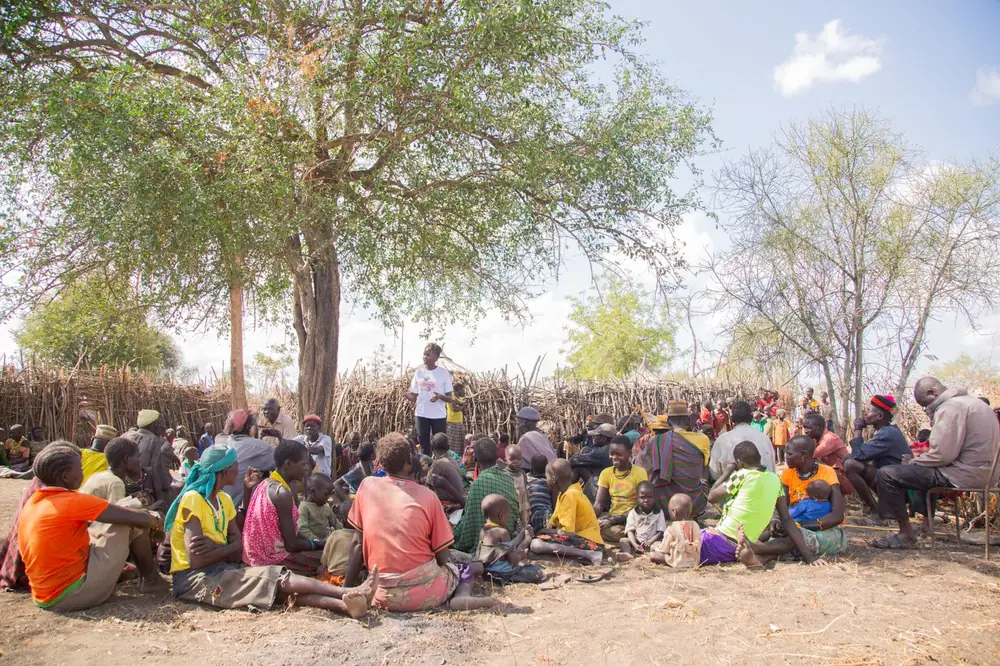
Cooperatives, processing sites, logistics routes and lenders.
Initiative Food — cooperative meeting

City halls, transit authorities and utility control rooms.
Initiative Cities — urban systems
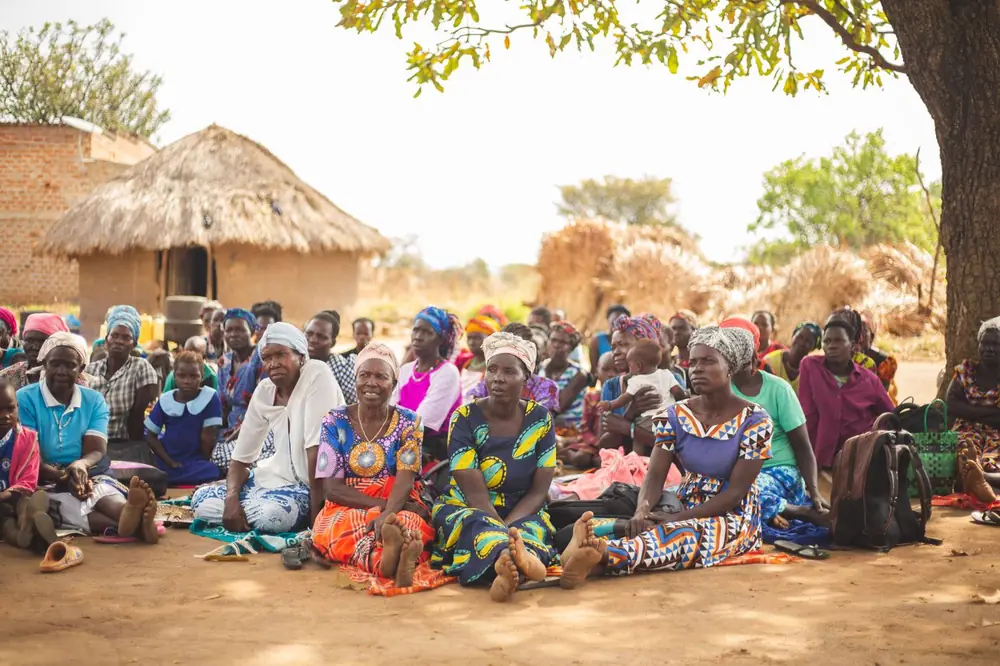
Chambers of commerce, regional institutions and diaspora networks.
Initiative Africa — regional partners
Bring an environment
If you run a health system, a ministry, a utility, a city or a network, the useful first conversation is about your constraints — what is already installed, what has to integrate, who approves it, and what the procurement route is. The intake asks for exactly that.